
Uses one lead in either the upper chamber (atrium) or the lower chamber (ventricle) to help control the heartbeat.
Uses two leads—one in the atrium and one in the ventricle—to help coordinate the electrical signals between the chambers.
Uses three leads: one in the right atrium, one in the right ventricle, and one near the left ventricle to improve heart function.
Understanding the procedure, purpose, and components of a pacemaker
A pacemaker is a small, battery-operated device. This device senses when your heart is beating slowly. It sends a signal to your heart that makes your heart beat at the correct pace.
Newer pacemakers weigh as little as 1 ounce (28 grams). Most pacemakers have 2 parts:
A pacemaker is implanted under the skin. This procedure takes about 1 hour in most cases. You will be given a sedative to help you relax. You will be awake during the procedure.
A small incision (cut) is made. Most often, the cut is on the left side of the chest below your collarbone. The pacemaker generator is then placed under the skin at this location. The generator may also be placed in the abdomen, but this is less common. A new "leadless" pacemaker is a self-contained unit that is implanted in the right ventricle of the heart.
Using live x-rays to see the area, the doctor puts the leads through the cut, into a vein, and then into the heart. The leads are connected to the generator. The skin is closed with stitches. Most people go home within 1 day of the procedure.
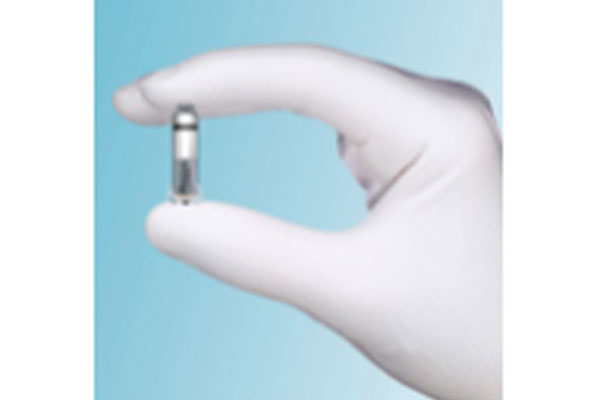
In April of 2016, the newest innovation in pacemaker therapy was approved in the United States - the Medtronic MICRA transvenously delivered leadless pacemaker system.
Leadless pacemaker systems no longer involve the need for a pacemaker generator to be placed in the chest along with leads running into the heart - it is directly implanted into the patient's heart with no transvenous leads involved. This device is 93% smaller than a conventional pacemaker system.
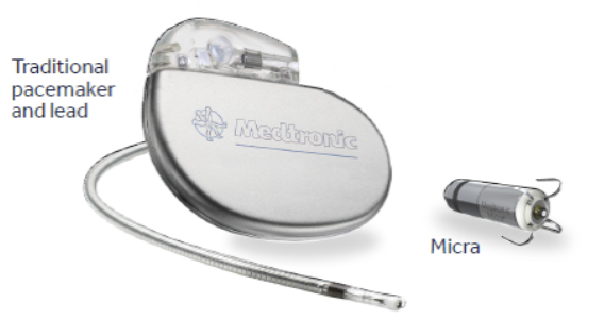
This technique is less invasive and involves using a transvenous catheter delivery system via the patient's femoral vein to insert a self-contained pacemaker system into the heart thus eliminating the need and complications arising from chest incision and wires running into the heart from the upper body venous system as with a conventional pacemaker system.
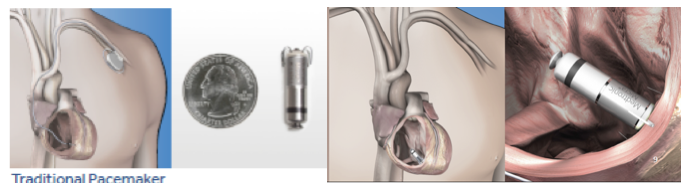
Comparison of traditional transvenous pacemaker system with MICRA leadless
system � comparable to the size of a
quarter- now placed in the bottom right ventricle of the heart with tines
securing its position without the need for
a wired system and traditional pacemaker placed in the upper chest.
The new leadless pacemaker system is generally safe for use with conventional MRI systems and has an estimated battery longevity on average of 12 years. As with conventional pacemaker systems, household appliances are safe to use. As well, patients can safely go through airport security metal detectors with this device with minimal concern.
The new MICRA pacemaker system is not intended to replace the conventional transvenous pacemaker system and you will need to discuss with your physician if you are a good candidate for this single-chamber ventricular pacemaker system. Indeed, the current MICRA system is only available as a single-chamber pacemaker device thus not applicable to those patients who need a dual-chamber system.